

Probate in Thailand After a Foreigner Dies: Why Families Need a Court Order
When a foreigner dies in Thailand, the family often assumes that a spouse, child, or next of kin can immediately access the deceased person’s bank account, condominium, vehicle, or other assets. In practice, this is not possible. Thai banks, land offices, and other authorities require proper legal authority before releasing or transferring estate assets.
This is where Thai probate becomes important. Probate is the court process used to appoint an estate administrator. Once appointed, the administrator can act on behalf of the estate, collect assets, communicate with banks, transfer property, pay debts, and distribute the estate according to the will or applicable inheritance law.
TFL’s website identifies inheritance and probate as a major service area and explains that the firm can assist families in becoming executor or administrator of a family member’s estate in Thailand. It also notes that estate assets may include property such as condominiums, vehicles, company shares, and other valuable property.
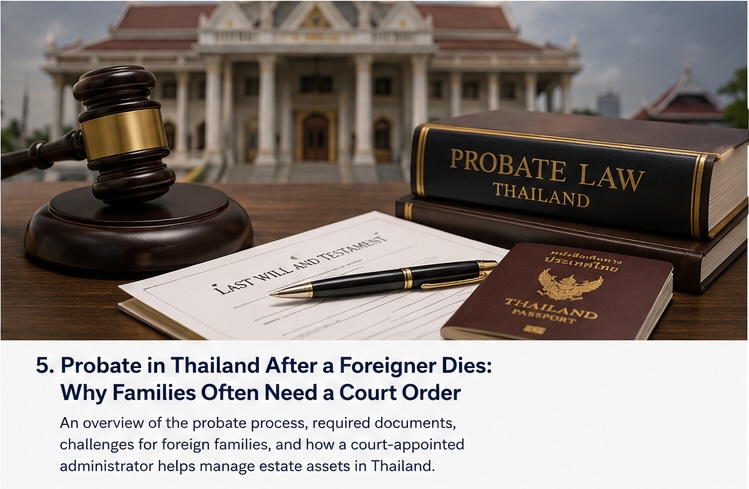
A Thai probate case is often needed even if the deceased person left a foreign will. The Thai court may need to consider whether the will is valid, whether it covers Thai assets, whether it has been properly translated and legalized, and who should be appointed as administrator. If there is no will, Thai intestacy rules may apply, and the court may need to determine who has the right to inherit.
Foreign families often face several practical problems. They may not know what assets exist in Thailand. The bank may refuse to disclose account details without a court order. The condominium juristic office may require proof of authority. The deceased person’s passport may be with the embassy, hospital, or police. The death certificate may be in Thai. Family members may be overseas and unable to attend court personally.
A power of attorney can help. In many cases, an overseas heir or proposed administrator can appoint a Thai lawyer or representative to prepare documents, file the petition, attend hearings, and coordinate with banks and government offices. However, the power of attorney must be carefully drafted and properly signed, witnessed, notarized, or legalized depending on where it is executed.
The main documents usually include the death certificate, passport of the deceased, family relationship documents, marriage certificate if relevant, birth certificates of children if relevant, will if one exists, asset evidence, and identification documents for the proposed administrator and heirs. Foreign-language documents usually need certified Thai translation.
Probate also interacts with death-in-Thailand procedures. Before probate can proceed smoothly, the family may need the official Thai death certificate, certified copies, police or hospital documents, and embassy documents. TFL’s death-in-Thailand materials note that death matters may involve autopsy reports, police reports, preliminary and final death certificates, cremation, repatriation, and estate issues.
The probate timeline depends on the court, documents, heirs, objections, and complexity of the estate. A simple uncontested case may be relatively straightforward. A contested case, unclear will, missing heirs, or foreign documentation problem can take longer.
Call to action:
If your family member died in Thailand and left bank accounts, property, or other assets, Thailand Family Law Partners can help assess whether a Thai probate order is needed and guide you through the estate administration process. Contact us today at info@thailandfamilylaw.com or by phone, WhatsApp, or Line at +66 855 393 675
