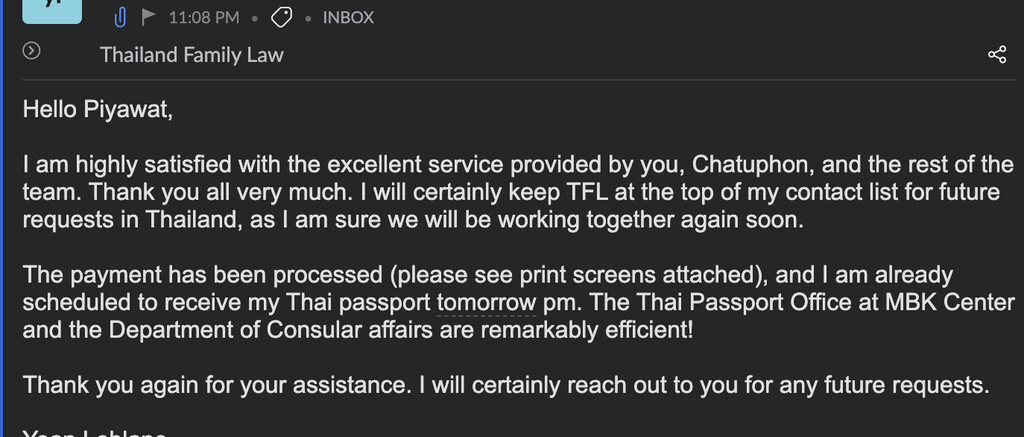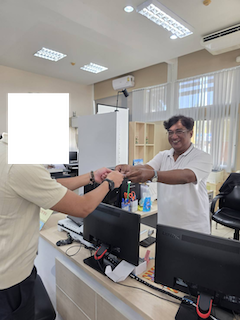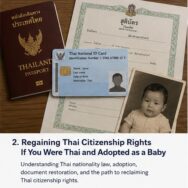


Regaining Thai Citizenship Rights If You Were Thai and Adopted as a Baby

Some people were born in Thailand, adopted as babies or young children, and raised overseas. Years later, they may want to know whether they are still Thai, whether they can obtain a Thai ID card or passport, or whether they need to “regain” Thai citizenship.

The answer depends on the person’s original legal status and what happened after adoption. Being adopted abroad does not automatically answer the question. The key issues are usually: Was the person born in Thailand? Was one parent Thai? Was Thai nationality ever formally renounced, revoked, or lost? Is there a Thai birth certificate? Was the person ever registered in a Thai house registration book? Were any Thai ID documents previously issued?

Thai nationality law is based partly on descent. A person born to a Thai mother or Thai father may acquire Thai nationality by birth, subject to the applicable law and facts. The Thai Nationality Act also contains provisions on loss and recovery of Thai nationality. For example, Section 22 refers to loss of Thai nationality where a Thai national has been naturalized as an alien, has renounced Thai nationality, or has had Thai nationality revoked. Section 23 deals with recovery of Thai nationality in certain circumstances.  

For an adopted child, the practical question is often not “Can I become Thai again?” but rather “Was I ever legally removed from Thai nationality, or do I simply need to prove and restore my Thai documentation?” In some cases, the person may still be Thai under the law but lacks current documents. In other cases, the person may need to apply for recovery or recognition of Thai nationality through the appropriate Thai authority.

Read more

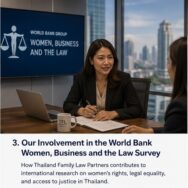
Thailand Family Law Partners and the World Bank Women, Business and the Law Survey

Thailand Family Law Partners is proud to contribute legal insight to international research on women’s rights, family law, and access to justice in Thailand. One important example is our involvement in responding to legal and practical questions connected with the World Bank Women, Business and the Law survey.

The Women, Business and the Law project examines how laws and institutions affect women’s economic opportunities. In the Thai context, many of the relevant issues overlap with family law, civil status, property rights, marriage, divorce, children, nationality, mobility, and access to legal remedies. These are areas where the written law is important, but practical enforcement is equally important.

A law may appear equal on paper, but women may still face barriers if public authorities apply the rule inconsistently, require excessive documentation, delay recognition of rights, or fail to provide clear procedures. For this reason, the survey asks not only what the law says, but also how legal rights are upheld in practice.

Read more

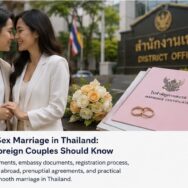
Same-Sex Marriage in Thailand: What Foreign Couples Should Know

Thailand has become one of the most important jurisdictions in Asia for marriage equality. Thailand’s marriage equality law allows same-sex couples to legally marry, and this development has attracted attention from couples around the world. TFL’s News page notes that Thailand’s marriage equality law allows same-sex couples to legally marry from January 22, 2025, and describes the reform as a major step for equal rights in Thailand.  

For foreign same-sex couples, Thailand may be an attractive place to marry, but the process still requires preparation. A couple cannot simply arrive in Thailand and register the marriage immediately without the correct documents. Foreigners usually need documents from their respective embassies confirming their legal capacity to marry. These documents must usually be translated into Thai and submitted through the required Thai administrative process before the marriage can be registered at a district office.

The exact requirements depend on nationality. A Spanish citizen, Filipino citizen, American citizen, British citizen, German citizen, or other foreign national may each face different embassy requirements. Some embassies issue an affidavit of freedom to marry. Others issue a certificate of no impediment or similar document. The wording, appointment system, processing time, and supporting documents can vary significantly.

Read more

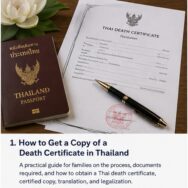
How to Get a Copy of a Death Certificate in Thailand

When a loved one dies in Thailand, one of the most important documents the family will need is the official Thai death certificate. This document is required for many legal, financial, and administrative steps, including probate, insurance claims, bank account matters, pension claims, repatriation of ashes or remains, and registration of the death overseas.

In Thailand, the official death certificate is issued by the local district office, known as the Amphur or Khet office, depending on the province. This is different from the medical certificate issued by a hospital or the police report that may be prepared if the death occurred outside a hospital. The hospital or police documentation helps support the death registration, but the official legal death certificate comes from the district office.

A common issue for foreign families is that only one original death certificate may have been issued at the time of death. Some embassies warn that once the original Thai death certificate has been issued, obtaining another copy can be difficult, and next of kin may need assistance from a Thai lawyer or local representative to request a duplicate or certified copy.  

Read more

The Probate Court Process in Thailand – A 2025 Update

Thailand has a large retirement community. With relatively easy retirement visas for those 50 years of age or older, Thailand has attracted foreigners from all over the world, who like Thailand’s lifestyle, conveniences, and cost of living. However, when your time comes to an end, what happens to your property in Thailand? The answer may surprise you, with this 2025 update on the probate court process in Thailand.

Do You Have a Last Will and Testament?

A last will and testament, commonly just called a will, is a document that lays out your wishes for your property. The important parties in a last will and testament in Thailand include the following:

  1. You
  2. The Beneficiary
  3. The Executor
  4. Witnesses

Yes, you need to be involved in your own will, and you need to be of sound mind and body, or someone might try to contest your will in Thailand.

Read more

Inheritance Rights of a Surviving Spouse in Thailand

How much does your Thai wife get when you die? The answer may surprise you. Thailand’s inheritance laws can be challenging, especially when it involves understanding the rights of a surviving spouse under Thai law. There is good news however – the Thai Civil and Commercial Code provides clear guidelines on how a deceased person’s estate is distributed among heirs, with specific provisions for surviving spouses.


Classes of Statutory Heirs

Under Section 1629 of the Thai Civil and Commercial Code, statutory heirs are categorized into six classes, prioritized as follows:

  1. Descendants
  2. Parents
  3. Full-blood siblings
  4. Half-blood siblings
  5. Grandparents
  6. Uncles and aunts

The presence of heirs in a higher class excludes those in lower classes from inheritance. For instance, if the deceased has surviving children, the parents or siblings do not inherit.

Read more

Celebrating Equality: Thailand Prepares for Marriage Equality This Week (23 January 2025)


Thailand is on the cusp of making history with the impending legalization of marriage equality. This monumental change, announced recently, will grant same-sex couples the same legal rights as heterosexual couples. The move is a significant milestone for LGBTQ+ rights in the country, long hailed as a progressive and inclusive society in Southeast Asia. As this legislation takes shape, it is vital for same-sex couples to understand their new rights and the legal protections available to them. At TFL (Thailand Family Law Partners), we are ready to support couples with expert guidance on marriage, prenuptial agreements (prenups), and inheritance matters tailored to the needs of the LGBTQ+ community.

Our law firm was recently featured in an article on marriage equality and same sex marriage in Thailand, which can be found here: https://www.humanresourcesonline.net/thailand-s-marriage-equality-bill-to-take-effect-on-22-january-2025

Read more

Funeral Directors in Thailand

Funeral Directors in Thailand: A Comprehensive Guide

In Thailand, the role of a funeral director is pivotal during the challenging times following the loss of a loved one. Handling the arrangements with sensitivity and respect, funeral directors assist both locals and foreigners through the intricate process of bidding farewell. This article aims to guide you through the services provided by funeral directors in Thailand, from locating the body to repatriating the ashes, and even preparing for probate if necessary.

Read more

Probate in Thailand: Understanding the Process

In Thailand, probate is the legal process of administering the estate of a deceased person. It involves verifying the validity of the deceased’s will and distributing their assets according to Thai inheritance law. For foreigners with assets in Thailand or Thai nationals with complex estates, understanding probate is crucial.

Initiating Probate

Probate starts when a person passes away, leaving behind assets in Thailand. If the deceased had a valid will, it would generally name an executor responsible for managing the estate. The executor must file for probate through the Thai courts, which will verify the authenticity of the will and appoint the executor to act on behalf of the estate. If no will exists, the estate is distributed according to intestate laws, where Thai law dictates the hierarchy of heirs.

Read more

Marriage Equality and Same Sex Marriage in Thailand Coming in 2025

Thailand’s Marriage Equality Bill, endorsed by His Majesty the King, is now law, allowing same-sex couples to legally marry starting January 22, 2025. This landmark legislation makes Thailand the third country in Asia to recognize same-sex marriage, using gender-neutral language and granting same-sex couples rights to adoption and inheritance. LGBTQ+ advocates celebrate this as a significant step toward equal rights. The bill is part of ongoing legal reforms to ensure comprehensive protections for the LGBTQ+ community in Thailand.

Read more