

Regaining Thai Citizenship Rights If You Were Thai and Adopted as a Baby
Some people were born in Thailand, adopted as babies or young children, and raised overseas. Years later, they may want to know whether they are still Thai, whether they can obtain a Thai ID card or passport, or whether they need to “regain” Thai citizenship.
The answer depends on the person’s original legal status and what happened after adoption. Being adopted abroad does not automatically answer the question. The key issues are usually: Was the person born in Thailand? Was one parent Thai? Was Thai nationality ever formally renounced, revoked, or lost? Is there a Thai birth certificate? Was the person ever registered in a Thai house registration book? Were any Thai ID documents previously issued?
Thai nationality law is based partly on descent. A person born to a Thai mother or Thai father may acquire Thai nationality by birth, subject to the applicable law and facts. The Thai Nationality Act also contains provisions on loss and recovery of Thai nationality. For example, Section 22 refers to loss of Thai nationality where a Thai national has been naturalized as an alien, has renounced Thai nationality, or has had Thai nationality revoked. Section 23 deals with recovery of Thai nationality in certain circumstances.
For an adopted child, the practical question is often not “Can I become Thai again?” but rather “Was I ever legally removed from Thai nationality, or do I simply need to prove and restore my Thai documentation?” In some cases, the person may still be Thai under the law but lacks current documents. In other cases, the person may need to apply for recovery or recognition of Thai nationality through the appropriate Thai authority.
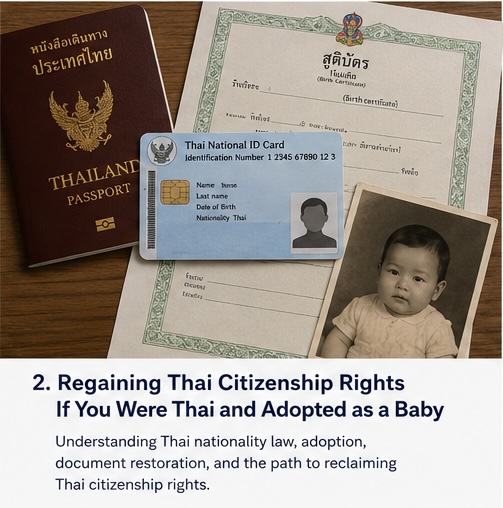
The most important documents usually include the Thai birth certificate, adoption documents, foreign adoption order, foreign passport, name-change documents, old Thai house registration record, any old Thai passport or Thai ID card, and documents showing the Thai parent’s identity. If the person’s name changed after adoption, the name-change chain must be clear. Thai authorities will usually need to connect the person’s current foreign identity to the original Thai birth identity.
Difficulties often arise because adoption records are incomplete, names were changed, Thai birth records are old, or the person does not know which district office registered the birth. In these cases, a Thai lawyer can help search records, contact district offices, review adoption paperwork, and prepare a legal strategy for nationality recognition or document restoration.
It is also important not to assume that having a foreign passport automatically means Thai nationality was lost. Thai nationality issues require careful review of the person’s birth facts, parental nationality, adoption history, and any formal renunciation or revocation records.
For many adoptees, regaining Thai citizenship rights is more than an administrative matter. It may involve identity, family history, inheritance rights, long-term residence in Thailand, and the ability to reconnect with Thai relatives and culture.
Contact TFL:
If you were born in Thailand and adopted overseas, Thailand Family Law Partners can review your birth, adoption, and nationality documents and help determine whether you may still have Thai citizenship rights or whether a formal recovery process is needed. Contact us today at info@thailandfamilylaw.com or by phone, WhatsApp, or Line at +66 855 393 675
